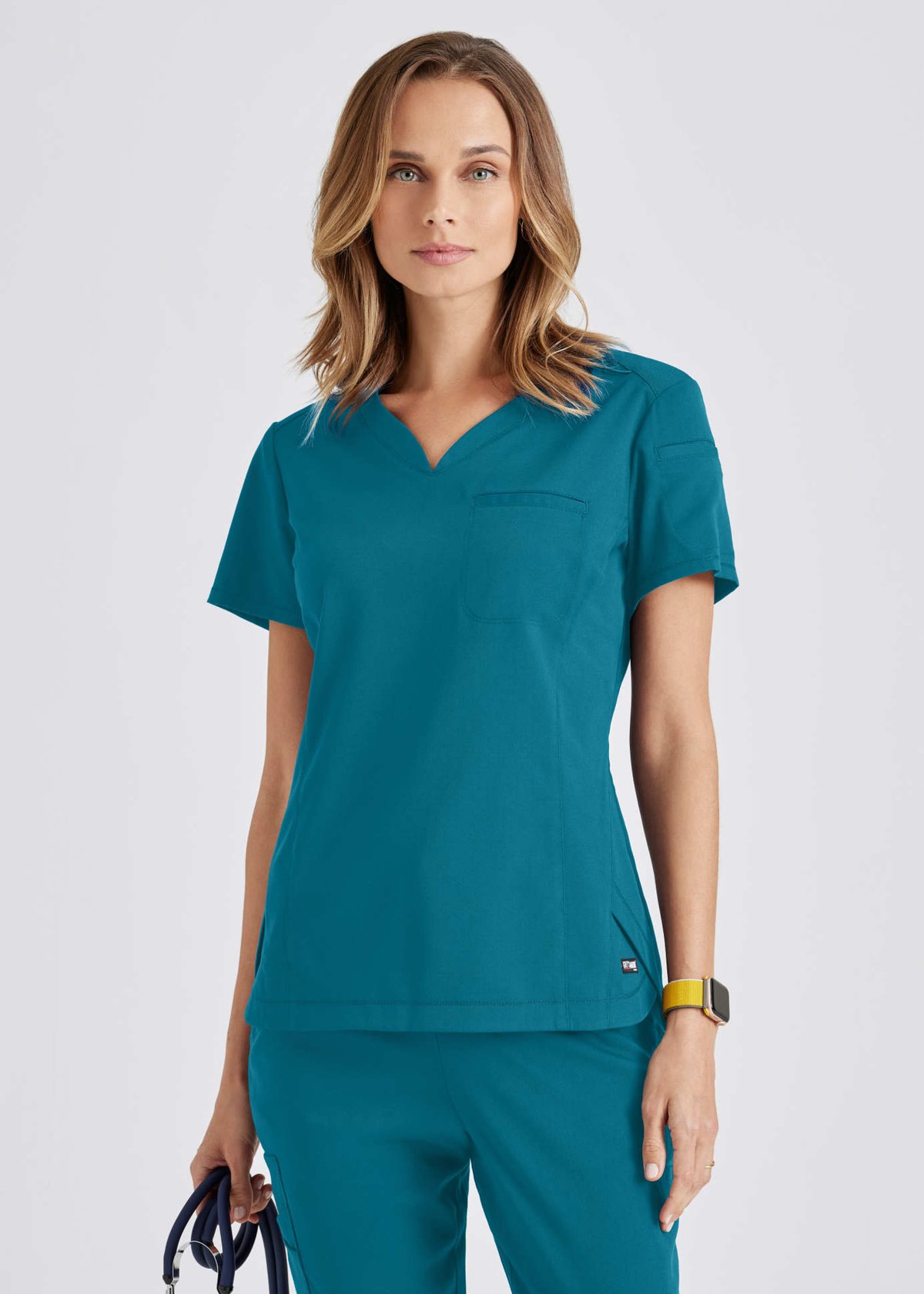
Let's be real: when you’re navigating a demanding shift, saving lives, or simply trying to make it through another busy day, your scrubs are more than just a uniform. They're your armor, your practical attire, and, yes, a significant part of your daily presentation. But "practical" doesn't have to mean "plain." In fact, Grey's Anatomy scrubs collection has become synonymous with bridging the gap between high-performance function and modern, flattering design. This guide is all about Styling Grey's Anatomy Scrubs for Work & Beyond—transforming your professional wear into outfits that boost your confidence and reflect your personal flair, without ever compromising on your critical role.
Forget the days of shapeless, institutional garb. With a little intentionality, your scrubs can be comfortable, professional, and stylish. We're here to show you how to look effortlessly put-together, whether you’re clocking in or running errands post-shift.
At a Glance: Your Blueprint for Stylish Scrubs
- Know Your Colors: Match scrub hues to your skin's undertones (warm or cool).
- Embrace the Duo: Stick to two primary colors for a polished, harmonious look.
- Accessorize Smartly: Simple, modest jewelry and coordinated stethoscopes elevate your style.
- Comfort is Key (But Make It Chic): Invest in supportive, durable, and stylish sneakers.
- Size Matters: Always wear well-fitting scrubs for comfort, mobility, and a professional appearance.
- Quality Over Quantity: Good scrubs mean better performance, comfort, and longevity.
- Care for Your Gear: Proper washing and maintenance keep your scrubs looking fresh longer.
- Mind Your Workplace: Be aware of policies regarding tattoos, piercings, and overall attire.
Beyond the Boilerplate: Why Your Scrub Style Matters
In the fast-paced world of healthcare, every second counts, and your focus needs to be on your patients, not your discomfort. But that doesn't mean aesthetics should be an afterthought. Feeling good in what you wear can genuinely impact your mood, your confidence, and even how others perceive your professionalism. When you choose quality medical apparel known for its fit and feel, like Grey's Anatomy scrubs, you're already halfway there. The next step is styling them purposefully.
This isn't about runway fashion; it's about smart choices that enhance your professional image and personal well-being. Think of it as investing in yourself, one well-styled scrub outfit at a time.
The Foundation: Building Blocks for a Flawless Scrub Look
Before we dive into color palettes and accessories, let's nail the fundamentals. A stylish scrub outfit starts with the right basics: fit, quality, and care. These aren't just aesthetic points; they directly impact your productivity and comfort.
DON'T: Wear the Wrong Size (Seriously, Don't)
This might seem obvious, but it's the most common style pitfall. Scrubs that are too big look sloppy and can snag on equipment, while scrubs that are too tight restrict movement and can be deeply uncomfortable throughout a long shift. Both scenarios impede your productivity and mobility—exactly what you don't want when patient care is on the line.
- Your Action Plan:
- Measure Up: Always check the sizing chart of the specific brand you're buying. Sizes can vary significantly between brands. Take current measurements of your bust, waist, hips, and inseam. Don't rely on your "usual" size.
- Consider Fit Styles: Grey's Anatomy scrubs, for instance, often offer various fit options—from classic relaxed to more tailored or jogger styles. Understand which cut suits your body shape and movement needs best. A jogger-style scrub pant, for example, offers a modern silhouette while keeping cuffs securely above the ankle, preventing tripping hazards.
- Test Mobility: When trying on scrubs, mimic movements you’d make during your workday: reach overhead, bend, squat, and walk briskly. Ensure there’s no pulling, gaping, or restrictive tightness.
DON'T: Go for Cheap Scrubs (It Costs More in the Long Run)
The temptation to save a few dollars on scrubs can be strong, especially when you need multiple sets. However, cheap scrubs often use inferior fabrics and construction. This leads to a host of problems: they regulate body temperature poorly, don't wick away sweat effectively, and quickly lose their shape, color, and flexibility. The result? You're uncomfortable, unprofessional-looking, and constantly replacing them.
- Your Action Plan:
- Invest Wisely: Good quality scrubs are designed with specific fabric blends (like polyester-rayon-spandex often used in Grey's Anatomy scrubs) that offer crucial features:
- Moisture-Wicking: Keeps you dry and comfortable.
- Stretch and Flexibility: Allows for unrestricted movement.
- Durability: Stands up to frequent washing and demanding conditions.
- Color Retention: Resists fading, keeping you looking sharp.
- Cost-Benefit Analysis: While the upfront cost might be higher, quality scrubs last significantly longer, perform better, and maintain a professional appearance, saving you money and discomfort over time.
DO: Take Care of Your Scrubs
Even the highest quality scrubs won't look great if they're not cared for properly. Proper maintenance prolongs their life, preserves their color, and ensures they always look crisp and professional.
- Your Action Plan:
- Read the Label: Always follow the care instructions on your scrub’s tag. Different fabric blends require different approaches.
- Wash Smart:
- Cold Water: Use cold water to prevent fading and shrinkage.
- Gentle Detergent: Harsh chemicals can degrade fabric fibers.
- Inside Out: Turning scrubs inside out before washing protects the outer surface and color.
- Separate Colors: Wash darks with darks, and lights with lights, especially new scrubs to prevent color bleeding.
- Drying:
- Low Heat or Air Dry: High heat can damage spandex fibers, lead to shrinkage, and cause colors to fade faster. Tumble dry on low or, even better, air dry when possible.
- Remove Promptly: This minimizes wrinkles and keeps them looking fresh.
- Stain Management: Treat stains immediately using appropriate stain removers before washing to prevent them from setting.
Mastering Color & Pattern: Your Visual Signature
Color is arguably the most impactful element of visual style. When done right, it makes you look thoughtful and polished. When done wrong, it can be distracting.
DO: Use Your Color Temperature as Reference
This is a powerful but often overlooked tip. Understanding your skin's undertone can guide you toward scrub colors that truly make you glow, rather than wash you out.
- How to Determine Your Color Temperature:
- Vein Test: Look at the veins on the inside of your wrist in natural light.
- Cool Undertones: If your veins appear blue or purple, you likely have cool undertones. Your skin may also have pink or rosy hues.
- Warm Undertones: If your veins appear greenish, you likely have warm undertones. Your skin may have golden or peach hues.
- Neutral Undertones: If you can't tell if your veins are blue or green, or if they appear a mix, you might have neutral undertones. Lucky you—you can pull off most colors!
- Jewelry Test: Do silver metals look better on you (cool), or do gold metals (warm)?
- White Paper Test: Hold a pure white piece of paper next to your face in natural light. If your skin looks more yellow or peachy, you're warm. If it looks more pink or blue, you're cool.
- Choosing Complementary Colors:
- Cool Tones: Excel in blues, purples, emerald greens, deep teals, true reds, and crisp whites.
- Warm Tones: Shine in olive greens, mustard yellows, oranges, earthy browns, coral, warm reds, and cream or off-white.
- Universal Colors: Navy, certain shades of grey, and black can often work for everyone.
- The Arm Test: When in doubt, hold a scrub color to your forearm in good lighting. Does it make your skin look vibrant, or does it create a jarring, unflattering contrast?
DO: Wear Two Colors (The Power of the Duo)
Limiting your primary color palette to two ensures a sophisticated and cohesive look. This doesn't mean boring; it means intentional.
- Sophisticated Options:
- Monochromatic with Depth: Pair two pieces of the same color, but with a slight variation in shade or intensity. For example, a darker navy scrub pant with a slightly brighter, but still navy, scrub top. This creates subtle dimension.
- Classic Contrast: Combine a neutral (black, white, grey) with a pop of color. A white scrub top with hunter green pants is always sharp. Or a black scrub bottom paired with a vibrant royal blue top. The neutral piece grounds the outfit, allowing the color to shine.
- Complementary Hues: For a bolder but still harmonious look, choose colors that sit opposite each other on the color wheel (e.g., a deep teal and a muted coral, or a plum and a sage green). This requires a bit more confidence but can look incredibly chic.
- Printed Scrubs Strategy: If you love printed scrubs, make them the star. Pair a patterned top with a solid bottom, or vice-versa. Crucially, pick a plain piece in one of the print's dominant colors (or a neutral like grey, black, or white) to avoid a "noisy" or overwhelming appearance. For example, a floral scrub top with a base of navy and hints of pink and green would look fantastic with plain navy scrub pants.
DON'T: Mix More Than Two Colors (Unless It's an Accent)
When it comes to your main scrub pieces, exceeding two primary colors quickly leads to visual chaos. Imagine a red top, blue pants, and a green undershirt—it’s distracting and detracts from professionalism.
- The "Rule of Three" (and How to Break It Tastefully): While two primary colors are ideal, a third color can work as a subtle accent. Think a colorful stitching detail on a pocket, a vibrant badge reel, or a subtle pattern on an undershirt where only a sliver is visible. The key is that this third color should be minimal and not compete for attention with your main two scrub pieces. It's about adding a hint of personality, not creating a kaleidoscope.
The Finer Points: Accessories & Footwear
Accessories are where your personal style truly shines, even within the confines of a uniform. But in a medical setting, "less is more" isn't just a suggestion—it's often a safety and professionalism requirement.
DO: Accessorize Thoughtfully
Your accessories should complement your scrubs, not overpower them. They should also be practical and safe for your work environment.
- Stethoscope Style: Your stethoscope is an extension of your professional self. Many brands offer a variety of tube colors. Choose one that either matches or harmonizes with your typical scrub palette. A classic black or grey is always a safe bet, but a deep burgundy or navy can add a touch of personality without being unprofessional.
- Jewelry: Modest and Simple:
- Earrings: Small studs (pearls, diamonds, or simple metallic) are always appropriate. Dangly earrings can get caught or become a hygiene concern.
- Necklaces: Keep necklaces short and close to the neck, ideally tucked under your scrub top. Avoid anything long or elaborate.
- Rings: Wedding bands or simple, smooth rings are fine. Intricate rings can harbor germs and be uncomfortable under gloves. Consider removing all rings if your job involves frequent hand washing or gloving.
- Watches: A functional, easy-to-clean watch is essential. Opt for styles with silicone or rubber straps that can be easily sanitized. Smartwatches are popular, but ensure their display isn't distracting.
- Badge Reels: This is another small but impactful way to add personality. Choose a badge reel with a subtle design, a pop of color, or one that reflects a hobby or interest, ensuring it's professional and doesn't dangle excessively.
- Undershirts: A well-fitting undershirt serves multiple purposes: warmth, modesty, and a splash of color. Choose a performance fabric that wicks moisture. The color should align with your two-color rule—either matching one of your scrub pieces, a neutral, or a subtle accent.
DO: Wear Comfortable Shoes (But Make Them Stylish)
In healthcare, your feet are your foundation. You spend hours on them, so comfort is non-negotiable. However, "comfortable" doesn't have to mean "clunky." Modern athletic footwear offers incredible support with sleek designs.
- Prioritize Function, Optimize Style:
- Support and Cushioning: Look for sneakers designed for long hours of standing and walking. Brands known for their arch support and responsive cushioning (e.g., Brooks, Hoka, Dansko, Alegria, certain Nike/Adidas models) are excellent choices.
- Wide Toe Box: This prevents pinching and discomfort, especially towards the end of a long shift when feet naturally swell.
- Slip-Resistant Soles: A critical safety feature in environments prone to spills.
- Easy to Clean: Materials like leather, synthetic leather, or certain meshes are easier to wipe down and sanitize.
- Integrating Style:
- Color Coordination: Your shoes are part of your outfit. Choose colors that complement your scrubs. Crisp white, black, or grey sneakers are versatile. You can also pick a sneaker color that matches or contrasts nicely with one of your scrub colors.
- Modern Silhouettes: Many athletic shoes now come in streamlined, fashionable designs that look far more polished than traditional clogs. Jogger scrub pants, in particular, pair very well with contemporary sneakers.
Navigating Workplace Norms: Professionalism First
While personal expression is important, the healthcare environment has unique demands and professional expectations. Always err on the side of caution and professionalism.
DON'T: Show Your Tattoos & Piercings (Unless Policy Allows)
This is a hot-button issue, and workplace policies vary widely. While society's views on visible tattoos and piercings are evolving, many healthcare facilities still maintain conservative dress codes, especially for patient-facing roles.
- Your Action Plan:
- Know Your Policy: Before anything else, understand your employer's specific dress code regarding body art. Ignorance is not an excuse.
- Discretion is Key: If your workplace policy is ambiguous or leans conservative, it's generally safer to cover tattoos and remove most piercings (beyond small, conventional ear studs).
- Strategic Coverage:
- Undershirts/Long Sleeves: A well-fitting long-sleeved undershirt is perfect for covering arm tattoos and adding warmth.
- Scarves: A lightweight, professional-looking scarf can cover neck tattoos (ensure it's not a safety hazard).
- Band-Aids/Makeup: For small, discreet facial piercings or tattoos, a flesh-toned band-aid or heavy-duty concealer might be an option if allowed and necessary.
- Body Piercings: Beyond standard earlobes, it's best to remove facial (nose, lip, brow) and oral piercings for shifts. These can be hygiene concerns, potential snag hazards, and may not align with professional expectations.
Beyond the Shift: Styling Scrubs for Errands & Downtime
One of the great advantages of high-quality, well-fitting scrubs, especially those known for their contemporary design like Grey's Anatomy scrubs, is their versatility. They're comfortable enough to seamlessly transition from your workplace to your everyday life.
Think about it: you've just finished a long shift, you're tired, but you need to grab groceries or pick up dry cleaning. The last thing you want to do is change into an entirely new outfit. This is where "styling for beyond" comes in.
- Layering for Casual Chic:
- Cardigans or Light Jackets: A stylish, soft cardigan or a structured denim jacket can instantly transform your scrub top into a casual blouse. Opt for colors that complement your scrubs. A fitted bomber jacket can also add a cool, urban edge.
- Hoodies/Pullover Sweaters: For ultimate comfort on your way home, layer a cozy hoodie or a soft pullover over your scrub top. This makes the outfit feel less "uniform" and more "leisurewear."
- Footwear Swaps:
- Fashion Sneakers: If your work sneakers are purely functional, swap them out for more fashionable athletic shoes or even casual canvas sneakers for your errands.
- Loafers or Flats: For a slightly more elevated look, especially if your scrub pants are a more tailored jogger or straight-leg cut, slip on a pair of comfortable loafers or ballet flats.
- Accessories that Make a Difference:
- Statement Bag: A chic tote bag or a crossbody purse instantly elevates your look.
- Sunglasses: Pop on a stylish pair of sunglasses to complete your off-duty ensemble.
- Hats: A baseball cap or a stylish beanie can add to the casual vibe and hide "scrub hair."
- Mix-and-Match with Non-Scrubs:
- Scrub Top + Jeans: A well-fitting scrub top can easily be paired with dark-wash jeans for a casual, comfortable outfit. The structured yet comfortable fabric of a Grey's Anatomy top can look surprisingly put-together.
- Scrub Joggers + Casual Top: Similarly, a pair of stylish scrub jogger pants can be paired with a simple T-shirt, a fitted tank top, or a casual button-down for a relaxed yet intentional look.
The key to styling scrubs for beyond work is to introduce elements that signal "off-duty" while maintaining the inherent comfort and cleanliness of your scrubs. This allows you to leverage your investment in quality medical apparel for more than just your professional hours.
Your Signature Scrub Style: A Recap & Next Steps
Styling your Grey's Anatomy scrubs isn't about adhering to rigid fashion rules; it's about making thoughtful choices that enhance your professional image, boost your personal comfort, and even extend the usability of your work wardrobe.
By focusing on the essentials—the right fit, quality materials, meticulous care, and smart color coordination—you can create outfits that are both impeccably professional and genuinely reflective of your individual style. Remember to accessorize subtly, choose comfortable yet chic footwear, and always respect your workplace's specific dress code.
Your Next Steps:
- Evaluate Your Current Wardrobe: Take stock of your existing scrubs. Do they fit well? Are they showing signs of wear and tear?
- Determine Your Color Temperature: Try the vein test and the arm test to understand your best color palette.
- Plan Your Next Purchase: When it's time to buy new scrubs, use this guide to select pieces that fit your body, flatter your complexion, and align with your professional goals. Consider mixing and matching different shades of Grey's Anatomy scrubs to build a versatile wardrobe.
- Experiment (Responsibly!): Try pairing your scrub tops with different undershirts or adding a new badge reel. See how small changes can make a big difference in how you feel and look.
Your job demands excellence, and so should your attire. With these tips, you’re not just wearing a uniform; you’re crafting a look that empowers you to perform at your best, with confidence and style, every single day.